What a RAADS-R Score Actually Means
Navigating the world of neurodiversity can be confusing, and tools like the RAADS-R are built to bring some structure to your self-discovery. The key is to see this questionnaire not as the final word, but as a powerful first step in understanding yourself better.
It’s a bit like suspecting you have a food sensitivity. You wouldn't diagnose yourself based on one meal, but you might start a food diary to track patterns. The RAADS-R works in a similar way—it's a self-report tool that helps you document and quantify traits that might have felt confusing or gone unnamed for years.
The RAADS-R is a clinical screening tool that helps identify adults who might be on the autism spectrum. Scores can range from 0 to 240. The higher your score, the more your experiences align with common autistic traits. The widely accepted clinical cutoff is a score of 65. Getting a score at or above this threshold is a strong indicator that it's worth pursuing a formal clinical evaluation.
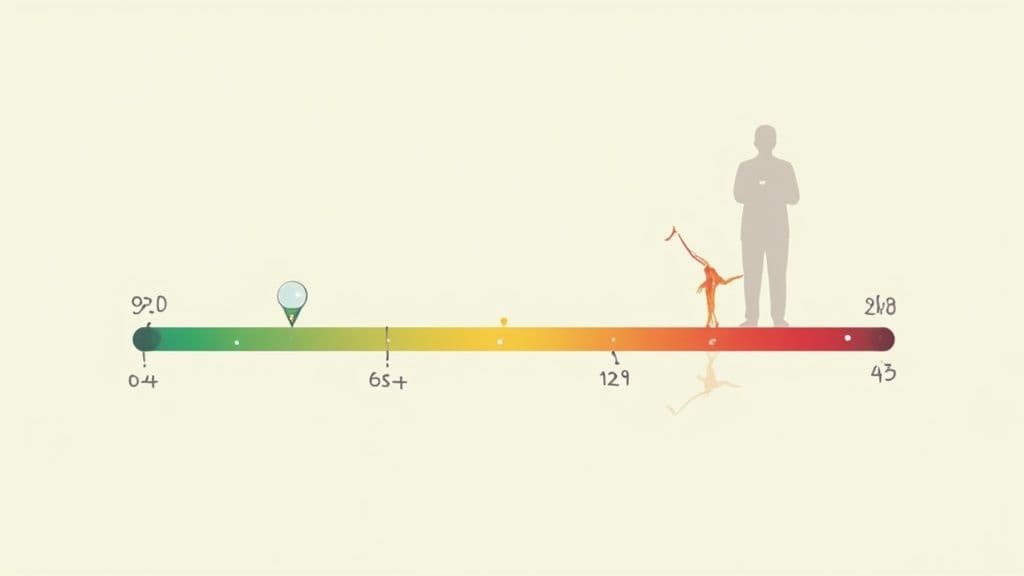
RAADS-R Score Ranges and Cutoff
Seeing the scores broken down can give you a much clearer picture. While the total score is a good starting point, understanding where you fall gives you a better sense of direction, especially if this is the first time you're exploring a potential adult diagnosis.
To make it simple, here’s a quick reference table that demystifies what the different score ranges generally suggest.
- Below 65: Your traits are generally not consistent with a diagnosis of ASD.
- 65 and Above: Your traits are consistent with ASD; a formal evaluation is advised.
Decoding the Four Key Areas of the RAADS-R
The RAADS-R score is much more than just a single number. Think of it as a composite score built from four distinct areas, or subscales. The total score gives you the big picture, but the subscale scores provide the nuance, showing you the specific traits and experiences that contributed to that result.
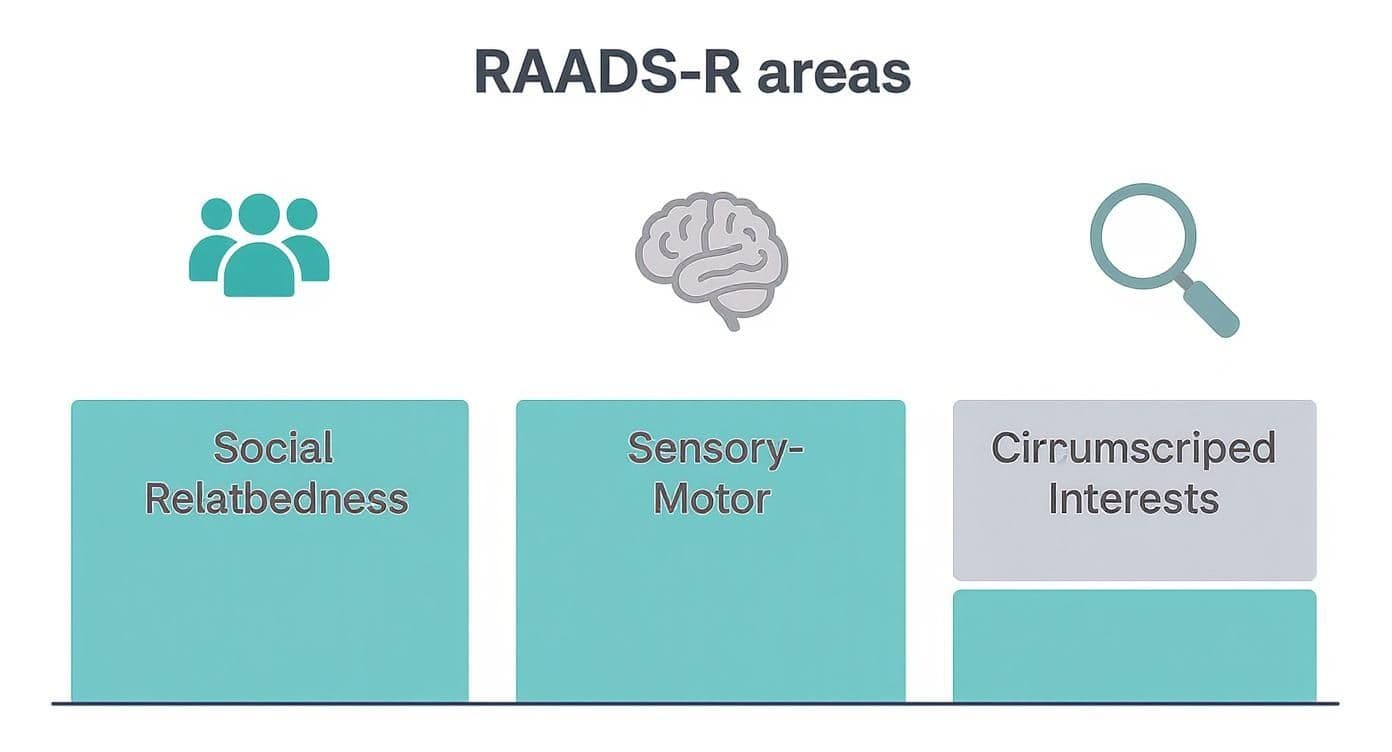
Each of these four areas measures a different facet of the autistic experience, giving you a much richer, more textured understanding of where you land. These aren’t just random categories; the 80 questions on the test are specifically designed to explore Social Relatedness, Language, Sensory-Motor experiences, and Circumscribed Interests, all of which align with the official DSM-5 diagnostic criteria for autism.
Social Relatedness
This subscale isn’t about whether you can socialize, but rather what that experience is like for you on the inside. It digs into the internal feelings and the energetic cost of social interaction.
Questions in this section explore things like:
-
Empathy: How you process and connect with the feelings of others.
-
Social Motivation: Your natural drive (or lack thereof) to seek out social connection.
-
Interpersonal Interest: How you genuinely feel about making and keeping friends.
A high score here often suggests that you feel like you're 'performing' in social settings, or that reading social cues feels less like intuition and more like doing complex mental math.
Language
The Language subscale is less about vocabulary and grammar and more about your relationship with communication itself, both verbal and non-verbal.
This area often picks up on common autistic experiences, such as:
-
Taking idioms and common phrases very literally.
-
Finding small talk to be pointless or incredibly difficult.
-
Struggling to read between the lines with sarcasm, body language, or tone of voice.
For instance, you might hear 'Can you pass the salt?' and your brain's first response is, 'Yes, I am physically capable of that action,' before you process it as a request.
Sensory-Motor
This section is all about your relationship with the physical world through your senses and your body. It covers both the sensory sensitivities and the motor-skill experiences that are common for autistic individuals.
This includes both hyper-sensitivities (being overly sensitive) and hypo-sensitivities (being under-sensitive) to stimuli like:
-
Sounds: A quiet ticking clock might sound like a drum in your ear.
-
Lights: Fluorescent lights in a store can feel physically painful or overwhelming.
-
Textures: The feeling of a certain fabric or the texture of a specific food might be unbearable.
-
Touch: A light, unexpected touch could feel jarring, while deep pressure feels calming and safe.
This area also touches on motor control, like a tendency towards clumsiness or engaging in repetitive, self-soothing movements, often called stimming.
Circumscribed Interests
Finally, this subscale looks at the unique intensity, depth, and focus of your passions, which are often called special interests. It also measures a preference for routine, sameness, and predictability.
A high score here doesn’t just mean you have hobbies; it points to a very different way of engaging with them. It’s about the pure, immersive joy that comes from a deep dive into a specific topic—whether that's ancient civilizations, complex video game lore, or the complete works of a favorite author.
Interpreting Your Score Beyond a Single Number
While a total score of 65 is often seen as the key cutoff on the RAADS-R, the full story of your results is written in the details. The real meaning behind your RAADS-R score isn’t a simple pass/fail; it’s a point on a spectrum of likelihood. A higher score simply means your experiences line up more closely with those of autistic people who have already been diagnosed.
Think of it like a weather forecast. A 30% chance of rain means you might see a few clouds, but a 95% chance means you should probably grab an umbrella. In the same way, a RAADS-R score just over the 65 threshold suggests some alignment, while a very high score indicates a strong probability that a formal evaluation would lead to an autism diagnosis.
This infographic breaks down the core areas that contribute to your total score, showing how different facets of your experience are considered.
Visualizing Your Score on the Spectrum
To help you see where you might fall, the table below provides a more detailed breakdown of what different score thresholds on the RAADS-R typically indicate. This moves beyond a single cutoff and helps you understand the graded interpretation professionals often use.
- Below 65: Generally indicates that traits are not consistent with an ASD diagnosis.
- 65 – 90: Suggests a moderate presence of autistic traits; a formal evaluation is recommended.
- 91 – 130: Signals a strong presence of autistic features and a high likelihood of ASD.
- 130 and Above: Indicates a very strong correlation with ASD; traits are highly consistent with a diagnosis.
Why the RAADS-R Is a Starting Point, Not a Final Answer
It’s so important to approach the RAADS-R with the right mindset. While it’s an incredibly useful screening tool, your score isn’t a diagnosis. Think of it like a weather app that predicts a high chance of rain—it’s a strong indicator, but you still need to look out the window to be sure.
A high score simply means that your self-reported experiences line up with those of many autistic adults. But it doesn't explain the why behind those experiences. A screening tool is great at gathering data points, but a full diagnostic evaluation is where those points are connected to tell the full story of your life. That distinction is everything when it comes to truly understanding your neurotype.
The Role of Masking and Comorbidities
Because the RAADS-R is a self-report questionnaire, its accuracy really hinges on your own self-awareness. This gets tricky when you factor in things like masking—the conscious or subconscious effort to hide autistic traits to fit in with neurotypical expectations. If you've spent years masking, it can be genuinely hard to answer questions about your true, unfiltered self.
Other conditions can also muddy the waters and lead to a 'false positive' on the test.
-
ADHD: There's a huge overlap in executive function challenges and social difficulties between ADHD and autism.
-
Anxiety Disorders: Social anxiety, in particular, can look a lot like the social challenges measured by the RAADS-R.
-
Trauma (C-PTSD): Past trauma can lead to sensory sensitivities and social withdrawal that mirror autistic traits on a questionnaire.
Understanding False Positives and Negatives
No screening tool is perfect, and the RAADS-R is no exception. It was designed to be highly sensitive, which means it’s very good at flagging people who might be autistic (true positives). The flip side is that this same sensitivity can sometimes flag people who aren't autistic but have those overlapping conditions we just talked about (false positives).
On the other hand, a false negative can happen, too. Someone who is autistic might score below the 65 cutoff, maybe because of a lifetime of effective masking or just a lack of awareness about their own traits. This is why your gut feeling matters so much. If you scored low but still feel a deep connection to the autistic experience, those feelings are valid and absolutely worth exploring further.
So You Have Your RAADS-R Score. What's Next?
Getting your RAADS-R score can feel like a big moment. For some, it brings a sense of validation, while for others, it might just bring more questions. Either way, it’s important to see this number not as a final answer, but as a signpost pointing you toward the next step in understanding yourself.
Think of the score as a powerful piece of information. It's a tool that helps you decide what to do next, whether that’s seeking a formal diagnosis or exploring other possibilities for why you feel the way you do. You now have valuable insight to guide you.
If Your Score Was High
Did you score at or above the 65 threshold? This is a strong sign that your life experiences align with those of many autistic adults. It's your cue to start thinking about a formal, professional assessment. This is the only way to get a definitive diagnosis, and a little preparation can make the whole process feel much less overwhelming.
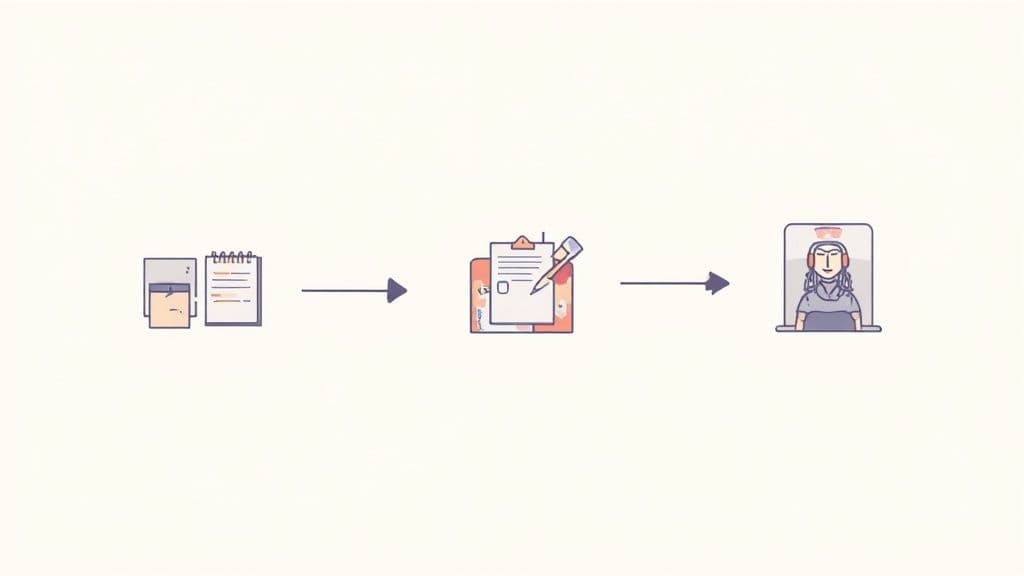
Here’s a simple roadmap to get you started:
-
Document Your Experiences: Go back through the RAADS-R questions. This time, try to jot down specific, real-life examples from both your childhood and your adult life that connect to those four subscales (Social Relatedness, Language, Sensory-Motor, Circumscribed Interests).
-
Gather Your History: Did you save any old school reports? Performance reviews from work? Journals? Anything that highlights long-standing patterns related to social communication, sensory issues, or intense interests can be incredibly helpful.
-
Find the Right Specialist: Look for a clinician or center that truly specializes in adult autism. It’s crucial to find someone who understands how autism can present differently in adults, especially those who have learned to mask their traits.
Pursuing a Formal Evaluation
Thankfully, getting a professional diagnosis is more accessible than ever before. Telehealth options mean you can connect with specialists from the comfort of your own home, which helps reduce the stress and sensory overwhelm that often comes with in-person appointments.
A comprehensive evaluation is so much more than a questionnaire. It involves deep, clinical interviews where a professional listens to your life story, asks targeted questions to distinguish autism from other co-occurring conditions, and puts together a complete, accurate picture.
Common Questions About RAADS-R Score Meaning
Getting your RAADS-R score is a big moment. It's totally normal for that number to bring up a whirlwind of feelings—validation, confusion, maybe even a little anxiety. Let's cut through the noise and tackle some of the most common questions people have after taking the test.
Think of this as a straightforward conversation to help you figure out what your raads-r score meaning is in the real world and what it might mean for you.
Does a High Score Definitely Mean I Am Autistic?
Not automatically, but it's a very strong signpost pointing in that direction. A score at or above the 65 threshold suggests that the experiences you've reported have a significant overlap with the traits of diagnosed autistic adults.
Think of it like a smoke detector. When it goes off, it's a loud, clear signal that there's a high probability of a fire. It doesn't tell you the size of the flame or where it started, but it absolutely tells you it's time to call in the professionals. A high RAADS-R score is that alarm—it's a clear indicator that a formal evaluation is a wise next step.